
廖瑞容
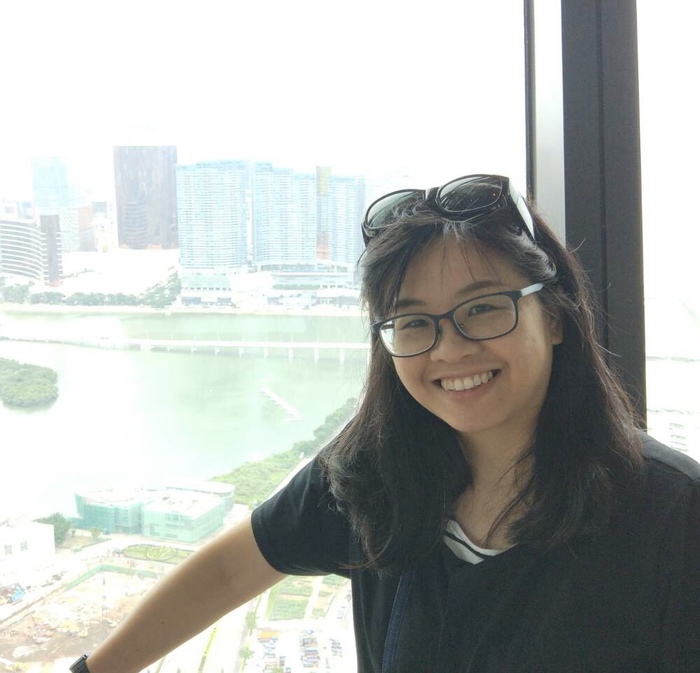
教師姓名:
廖瑞容Liao,Rui-rong
職稱:
教授
分機號碼:
1451
教師研究室位置:
綜大6樓企管系教師研究室
最高學歷:
國立台灣科技大學_工業管理系博士
經歷:
致理科技大學企業管理系教授
龍華科技大學 商學與管理研究所 專任副教授
Publication articles
1. Jui-Jung Liao*, H. M. Srivastava, Shy-Der Lin, (2025), “Sustainable inventory models with reduction on environmental emission and ordering costs under the discount policy of prepayment”, Journal of Industrial and Management Optimization, 21(11), p.6295-p.6321. (SCIE)
2. Shun-Po Chiu, Jui-Jung Liao*, Sung-Lien Kang, H. M. Srivastava, Shy-Der Lin, (2024), “Sustainable inventory managements for non-instantaneous deteriorating items: preservation technology and green technology approaches with advanced purchase discounts and joint emission regulations”, Sustainability, 16(16), 6805. (SCIE)
3. Jui-Jung Liao*, H. M. Srivastava, Shy-Der Lin, (2024), “Inventory models for non-instantaneous deteriorating items with expiration dates under the joined effect of preservation technology and linearly time-dependent holding cost when order-size linked to advance payment”, Annals of Operations Research, 337, p.197-p.233. (SCIE)
4. Kun-Jen Chung, Shih-Fang Lee, H. M. Srivastava, Shy-Der Lin, Sung-Lien Kang, Jui-Jung Liao*, (2023), “Optimal ordering policy and preservation technology for deteriorating items with maximum lifetime under a resilient hybrid payment decision”, Journal of Industrial and Management Optimization, 19(7), p.5353-p.5379. (SCIE)
5. Sung-Lien Kang, Shih-Fang Lee, Wen-Lin Kuo, Jui-Jung Liao1∗, (2023), “Retailer’s lot-sizing decisions with imperfect quality and capacity constraint under generalized payments in three-level supply chain”, International Journal of Information and Management Sciences, 34, p.79-p.97. (EI)
6. H. M. Srivastava∗, Jui-Jung Liao, Kuo-Nan Huang, Kun-Jen Chung, Shy-Der Lin, Shih-Fang Lee, (2022), “Supply chain inventory model for deteriorating products with maximum lifetime under trade credit financing”, TWMS Journal of Pure and Applied Mathematics, 13(1), p.53-p.71 (SCIE)
7. Kun-Jen Chung, Jui-Jung Liao*, H. M. Srivastava, Shih-Fang Lee, Shy-Der Lin, (2021), “The EOQ model for deteriorating items with a conditional trade credit linked to order quantity in a supply chain system”, Mathematics, 9(18), p.2311, (SCIE)
8. Jui-Jung Liao*, H. M. Srivastava, Kun-Jen Chung, Shih-Fang Lee, Kuo-Man Huang, Shy-Der Lin, (2021), “Inventory models for non-instantaneous deteriorating items with expiration dates and imperfect quality under hybrid payment policy in the three-level supply chain”, Symmetry, 13(9), 1695. (SCIE)
9. H. M. Srivastava*, Kun-Jen Chun, Jui-Jung Liao, Shy-Der Lin, Shih-Fang Lee, (2021), “An accurate and reliable mathematical analytic solution procedure for the EOQ model with non-instantaneous receipt under supplier credits”, Revista de la Real Academia de Ciencias Exactas, Físicas y Naturales. Serie A. Matemáticas, 115, 1, (SCIE)
10. Kun-Jen Chung, Jui-Jung Liao, Shy-Der Lin, Sheng-Tu Chuang, H. M. Srivastava*, (2020), “Manufacturer’s optimal pricing and lot-sizing policies under trade-credit financing”, Mathematical Methods in the Applied Sciences, 43(6), p.3099-p.3116, (SCIE)
11. Jui-Jung Liao, Kuo-Nan Huang, Kun-Jen Chung, Shy-Der Lin, Sheng-Tu Chuang, H. M. Srivastava*, (2020), “Optimal ordering policy in an economic order quantity (EOQ) model for non-instantaneous deteriorating items with defective quality and permissible delay in payments”, Revista de la Real Academia de Ciencias Exactas, Físicas y Naturales. Serie A. Matemáticas, 114(1), 41, (SCIE)
12. Kun-Jen Chung, Jui-Jung Liao, Shy-Der Lin, Sheng-Tu Chuang, H. M. Srivastava*, (2020), “Mathematical analytic techniques and the complete squares method for solving an inventory modelling problem with a mixture of backorders and lost sales”, Revista de la Real Academia de Ciencias Exactas, Físicas y Naturales. Serie A. Matemáticas, 114(1), p.114-p.128, (SCIE)
13. H. M. Srivastava*, Kun-Jen Chung, Jui-Jung Liao, Shy-Der Lin, Sheng-Tu Chuang, (2019), “Some modified mathematical analytic derivations of the annual total relevant cost of the inventory model with two levels of trade credit in the supply chain system”, Mathematical Methods in the Applied Sciences, 42, p.3967-p.3977, (SCIE)
14. Kun-Jen Chung, Jui-Jung Liao, Shy-Der Lin, Sheng-Tu Chuang, H. M. Srivastava*, (2019), “The inventory model for deteriorating items under conditions involving cash discount and trade credit”, Mathematics, 7, 596. (SCIE)
15. Kun-Jen Chung, Jui-Jung Liao, Pin-Shou Ting, Shy-Der Lin, H. M. Srivastava*, (2018), “A unified presentation of inventory models under quantity discounts, trade credits and cash discounts in the supply chain management”, Revista de la Real Academia de Ciencias Exactas, Físicas y Naturales. Serie A. Matemáticas, 112, p.509-p.538. (SCIE)
16. Jui-Jung Liao, Kuo-Nan Huang, Kun-Jen Chung, Shy-Der Lin, Pin-Shou Ting, H. M. Srivastava*, (2018), “Mathematical analytic techniques for determining the optimal ordering strategy for the retailer under the permitted trade-credit policy of two levels in a supply chain system”, Filomat, 32, p.4195-p.4207. (SCIE)
17. Jui-Jung Liao, Kuo-Nan Huang, Kun-Jen Chung, Shy-Der Lin, Pin-Shou Ting, H. M. Srivastava*, (2018), “Retailer's optimal ordering policy in the EOQ model with imperfect‐quality items under limited storage capacity and permissible delay”, Mathematical Methods in the Applied Sciences, 41, p.7624-p.7640, (SCIE)
18. Jui-Jung Liao, Kuo-Nan Huang, Kun-Jen Chung, Shy-Der Lin, Pin-Shou Ting, H. M. Srivastava*, (2017), “Determination of the optimal ordering policy for the retailer with limited capitals when a supplier offers 2 levels of trade credit”, Mathematical Methods in the Applied Sciences, 40, p.7686-p.7696. (SCIE).
19. Kun-Jen Chung*, Leopoldo Eduardo Cárdenas-Barrón, Jui-Jung Liao, Pin-Shou Ting, (2018), “The simplified solution procedures for solving replenishment lot size problem with discontinuous issuing policy and rework”, Journal of Information and Optimization Sciences, 39(8), p.1665-p.1672. (EI)
20. Jui-Jung Liao*, Wei-Chun Lee, Kuo-Nan Huang, Yung-Fu Huang, (2017), “Optimal ordering policy for a two-warehouse inventory model use of two-level trade credit”, Journal of Industrial and Management Optimization, 13(4), p.1661-p.1683. (SCIE)
21. Jui-Jung Liao*, Kuo-Nan Huang, Kun-Jen Chung, Pin-Shou Ting, Shy-Der Lin, H. M. Srivastava, (2016), “Lot-sizing policies for deterioration items under two-level trade credit with partial trade credit to credit-risk retailer and limited storage capacity”, Mathematical Methods in the Applied Sciences, 40(6), p.2122-p.2139. (SCIE)
22. Kun-Jen Chung, Jui-Jung Liao, Pin-Shou Ting, Shy-Der Lin, H. M. Srivastava, (2015), “The algorithm for the optimal cycle time and pricing decisions for an integrated inventory system with order-size dependent trade credit in supply chain management”, Applied Mathematics and Computation, 268(1), p.322-p.333. (SCIE)
23. Jui-Jung Liao, Kuo-Nan Huang, Pin-Shou Ting, (2014), “Optimal strategy of deteriorating items with capacity constraints under two-levels of trade credit policy”, Applied Mathematics and Computation, 233, p.647-p.658. (SCIE)
24. Jui-Jung Liao*, Kun-Jen Chung, Kuo-Nan Huang, (2013), “A deterministic inventory model for deteriorating items with two warehouses and trade credit in a supply chain system”, International Journal of Production Economics, 146, p.557-p.565. (SCIE)
25. Jui-Jung Liao, Kuo-Nan Huang, Kun-Jen Chung*, (2013), “Optimal pricing and ordering policy for perishable items with limited storage capacity and partial trade credit”, IMA Journal of Management Mathematics, 24, p.45-p.61. (SCIE)
26. Jui-Jung Liao*, Pin-Shou Ting, Chih-Hsiang Lin, (2013), Optimal ordering policy for deteriorating items under permissible delay in payments from the DCF approach, Journal of Statistics and Management Systems, 16(6), p.419-p.431. (EI)
27. Jui-Jung Liao*, Kuo-Nan Huang, Pin-Shou Ting, (2013), “A note on inventory ordering policies of delayed deteriorating items under permissible delay in payments”, Journal of Information and Optimization Sciences, 34(6), p.405-p.416. (EI)
28. Jui-Jung Liao*, Kuo-Nan Huang, Kun-Jen Chung, (2012), “Lot-sizing decisions for deteriorating items with two warehouses under an order-size-dependent trade credit”, International Journal of Production Economics, 137, p.102-p.115. (SCIE)
29. Jui-Jung Liao*, Kuo-Nan Huang, Yung-Fu Huang, (2012), “A note on the optimal order and payment policies for deteriorating items in discount cash flows analysis under the alternatives of conditionally permissible delay in payments and cash discount”, Journal of Statistics and Management Systems, 15(1), p.21-p.27. (EI)
30. Kun-Jen Chung*, Jui-Jung Liao, (2011), “The simplified solution algorithm for an integrated supplier–buyer inventory model with two-part trade credit in a supply chain system”, European Journal of Operational Research, 213, p.156-p.165. (SCIE)
31. Jui-Jung Liao*, Kuo-Nan Huang, (2010), “Deterministic inventory model for deteriorating items with trade credit financing and capacity constraints”, Computers & Industrial Engineering, 59(4), p.611-p.618. (SCIE)
32. Kun-Jen Chung*, Jui-Jung Liao, (2009), “The optimal ordering policy of the EOQ model under trade credit depending on the ordering quantity from the DCF approach”, European Journal of Operational Research, 196, p.563-p.568. (SCIE)
33. Jui-Jung Liao*, Kun-Jen Chung, (2009), “An EOQ model for deterioration items under trade credit policy in a supply chain system”, Journal of the Operations Research Society of Japan, 52(1), p.46-p.57.
34. Yale Wang, Yung-Fu Huang, Jui-Jung Liao, (2009), “Retailer's economic ordering quantity under partial payments delay: an algebraic approach”, Journal of Information and Optimization Sciences, 30(1), p.121-p.133. (EI)
35. Jui-Jung Liao*, Kuo-Nan Huang, (2008), “An inventory model for deteriorating items with two levels of trade credit taking account of time discounting”, Acta Applicandae Mathematicae, 110, p.313-p.326. (SCIE)
36. Jui-Jung Liao*, (2008), “An EOQ model with noninstantaneous receipt and exponentially deteriorating items under two-level trade credit”, International Journal of Production Economics, 113, p.852-p.861. (SCIE)
37. Jui-Jung Liao*, (2008), “An inventory control system under deferrable delivery conditions”, Mathematical and Computer Modelling, 47, p.247-p.258. (SCIE)
38. Kuo-Nan Huang, Jui-Jung Liao*, (2008), “A simple method to locate the optimal solution for exponentially deteriorating items under trade credit financing”, Computers and Mathematics with Applications, 56, p.965-p.977. (SCIE)
39. Jui-Jung Liao*, Kuo-Nan Huang, Yung-Fu Huang, (2008), “The EOQ model for two-echelon trade credit derived without derivatives”, Journal of Information and Optimization Sciences, 29(6), p.1157-p.1167. (EI)
40. Kun-Jen Chung*, Jui-Jung Liao, (2007), “A note on optimal ordering policies of EOQ model under discount of purchase price or increase of setup cost”, Journal of Statistics and Management Systems, 10(4), p.583-p.607. (EI)
41. Yung-Fu Huang*, Chung-Li Chou, Jui-Jung Liao, (2007), “An EPQ model under cash discount and permissible delay in payments derived without derivatives”, Yugoslav Journal of Operations Research, 17(2), p.177-p.193. (EI)
龍華科技大學 商學與管理研究所 專任副教授
Publication articles
1. Jui-Jung Liao*, H. M. Srivastava, Shy-Der Lin, (2025), “Sustainable inventory models with reduction on environmental emission and ordering costs under the discount policy of prepayment”, Journal of Industrial and Management Optimization, 21(11), p.6295-p.6321. (SCIE)
2. Shun-Po Chiu, Jui-Jung Liao*, Sung-Lien Kang, H. M. Srivastava, Shy-Der Lin, (2024), “Sustainable inventory managements for non-instantaneous deteriorating items: preservation technology and green technology approaches with advanced purchase discounts and joint emission regulations”, Sustainability, 16(16), 6805. (SCIE)
3. Jui-Jung Liao*, H. M. Srivastava, Shy-Der Lin, (2024), “Inventory models for non-instantaneous deteriorating items with expiration dates under the joined effect of preservation technology and linearly time-dependent holding cost when order-size linked to advance payment”, Annals of Operations Research, 337, p.197-p.233. (SCIE)
4. Kun-Jen Chung, Shih-Fang Lee, H. M. Srivastava, Shy-Der Lin, Sung-Lien Kang, Jui-Jung Liao*, (2023), “Optimal ordering policy and preservation technology for deteriorating items with maximum lifetime under a resilient hybrid payment decision”, Journal of Industrial and Management Optimization, 19(7), p.5353-p.5379. (SCIE)
5. Sung-Lien Kang, Shih-Fang Lee, Wen-Lin Kuo, Jui-Jung Liao1∗, (2023), “Retailer’s lot-sizing decisions with imperfect quality and capacity constraint under generalized payments in three-level supply chain”, International Journal of Information and Management Sciences, 34, p.79-p.97. (EI)
6. H. M. Srivastava∗, Jui-Jung Liao, Kuo-Nan Huang, Kun-Jen Chung, Shy-Der Lin, Shih-Fang Lee, (2022), “Supply chain inventory model for deteriorating products with maximum lifetime under trade credit financing”, TWMS Journal of Pure and Applied Mathematics, 13(1), p.53-p.71 (SCIE)
7. Kun-Jen Chung, Jui-Jung Liao*, H. M. Srivastava, Shih-Fang Lee, Shy-Der Lin, (2021), “The EOQ model for deteriorating items with a conditional trade credit linked to order quantity in a supply chain system”, Mathematics, 9(18), p.2311, (SCIE)
8. Jui-Jung Liao*, H. M. Srivastava, Kun-Jen Chung, Shih-Fang Lee, Kuo-Man Huang, Shy-Der Lin, (2021), “Inventory models for non-instantaneous deteriorating items with expiration dates and imperfect quality under hybrid payment policy in the three-level supply chain”, Symmetry, 13(9), 1695. (SCIE)
9. H. M. Srivastava*, Kun-Jen Chun, Jui-Jung Liao, Shy-Der Lin, Shih-Fang Lee, (2021), “An accurate and reliable mathematical analytic solution procedure for the EOQ model with non-instantaneous receipt under supplier credits”, Revista de la Real Academia de Ciencias Exactas, Físicas y Naturales. Serie A. Matemáticas, 115, 1, (SCIE)
10. Kun-Jen Chung, Jui-Jung Liao, Shy-Der Lin, Sheng-Tu Chuang, H. M. Srivastava*, (2020), “Manufacturer’s optimal pricing and lot-sizing policies under trade-credit financing”, Mathematical Methods in the Applied Sciences, 43(6), p.3099-p.3116, (SCIE)
11. Jui-Jung Liao, Kuo-Nan Huang, Kun-Jen Chung, Shy-Der Lin, Sheng-Tu Chuang, H. M. Srivastava*, (2020), “Optimal ordering policy in an economic order quantity (EOQ) model for non-instantaneous deteriorating items with defective quality and permissible delay in payments”, Revista de la Real Academia de Ciencias Exactas, Físicas y Naturales. Serie A. Matemáticas, 114(1), 41, (SCIE)
12. Kun-Jen Chung, Jui-Jung Liao, Shy-Der Lin, Sheng-Tu Chuang, H. M. Srivastava*, (2020), “Mathematical analytic techniques and the complete squares method for solving an inventory modelling problem with a mixture of backorders and lost sales”, Revista de la Real Academia de Ciencias Exactas, Físicas y Naturales. Serie A. Matemáticas, 114(1), p.114-p.128, (SCIE)
13. H. M. Srivastava*, Kun-Jen Chung, Jui-Jung Liao, Shy-Der Lin, Sheng-Tu Chuang, (2019), “Some modified mathematical analytic derivations of the annual total relevant cost of the inventory model with two levels of trade credit in the supply chain system”, Mathematical Methods in the Applied Sciences, 42, p.3967-p.3977, (SCIE)
14. Kun-Jen Chung, Jui-Jung Liao, Shy-Der Lin, Sheng-Tu Chuang, H. M. Srivastava*, (2019), “The inventory model for deteriorating items under conditions involving cash discount and trade credit”, Mathematics, 7, 596. (SCIE)
15. Kun-Jen Chung, Jui-Jung Liao, Pin-Shou Ting, Shy-Der Lin, H. M. Srivastava*, (2018), “A unified presentation of inventory models under quantity discounts, trade credits and cash discounts in the supply chain management”, Revista de la Real Academia de Ciencias Exactas, Físicas y Naturales. Serie A. Matemáticas, 112, p.509-p.538. (SCIE)
16. Jui-Jung Liao, Kuo-Nan Huang, Kun-Jen Chung, Shy-Der Lin, Pin-Shou Ting, H. M. Srivastava*, (2018), “Mathematical analytic techniques for determining the optimal ordering strategy for the retailer under the permitted trade-credit policy of two levels in a supply chain system”, Filomat, 32, p.4195-p.4207. (SCIE)
17. Jui-Jung Liao, Kuo-Nan Huang, Kun-Jen Chung, Shy-Der Lin, Pin-Shou Ting, H. M. Srivastava*, (2018), “Retailer's optimal ordering policy in the EOQ model with imperfect‐quality items under limited storage capacity and permissible delay”, Mathematical Methods in the Applied Sciences, 41, p.7624-p.7640, (SCIE)
18. Jui-Jung Liao, Kuo-Nan Huang, Kun-Jen Chung, Shy-Der Lin, Pin-Shou Ting, H. M. Srivastava*, (2017), “Determination of the optimal ordering policy for the retailer with limited capitals when a supplier offers 2 levels of trade credit”, Mathematical Methods in the Applied Sciences, 40, p.7686-p.7696. (SCIE).
19. Kun-Jen Chung*, Leopoldo Eduardo Cárdenas-Barrón, Jui-Jung Liao, Pin-Shou Ting, (2018), “The simplified solution procedures for solving replenishment lot size problem with discontinuous issuing policy and rework”, Journal of Information and Optimization Sciences, 39(8), p.1665-p.1672. (EI)
20. Jui-Jung Liao*, Wei-Chun Lee, Kuo-Nan Huang, Yung-Fu Huang, (2017), “Optimal ordering policy for a two-warehouse inventory model use of two-level trade credit”, Journal of Industrial and Management Optimization, 13(4), p.1661-p.1683. (SCIE)
21. Jui-Jung Liao*, Kuo-Nan Huang, Kun-Jen Chung, Pin-Shou Ting, Shy-Der Lin, H. M. Srivastava, (2016), “Lot-sizing policies for deterioration items under two-level trade credit with partial trade credit to credit-risk retailer and limited storage capacity”, Mathematical Methods in the Applied Sciences, 40(6), p.2122-p.2139. (SCIE)
22. Kun-Jen Chung, Jui-Jung Liao, Pin-Shou Ting, Shy-Der Lin, H. M. Srivastava, (2015), “The algorithm for the optimal cycle time and pricing decisions for an integrated inventory system with order-size dependent trade credit in supply chain management”, Applied Mathematics and Computation, 268(1), p.322-p.333. (SCIE)
23. Jui-Jung Liao, Kuo-Nan Huang, Pin-Shou Ting, (2014), “Optimal strategy of deteriorating items with capacity constraints under two-levels of trade credit policy”, Applied Mathematics and Computation, 233, p.647-p.658. (SCIE)
24. Jui-Jung Liao*, Kun-Jen Chung, Kuo-Nan Huang, (2013), “A deterministic inventory model for deteriorating items with two warehouses and trade credit in a supply chain system”, International Journal of Production Economics, 146, p.557-p.565. (SCIE)
25. Jui-Jung Liao, Kuo-Nan Huang, Kun-Jen Chung*, (2013), “Optimal pricing and ordering policy for perishable items with limited storage capacity and partial trade credit”, IMA Journal of Management Mathematics, 24, p.45-p.61. (SCIE)
26. Jui-Jung Liao*, Pin-Shou Ting, Chih-Hsiang Lin, (2013), Optimal ordering policy for deteriorating items under permissible delay in payments from the DCF approach, Journal of Statistics and Management Systems, 16(6), p.419-p.431. (EI)
27. Jui-Jung Liao*, Kuo-Nan Huang, Pin-Shou Ting, (2013), “A note on inventory ordering policies of delayed deteriorating items under permissible delay in payments”, Journal of Information and Optimization Sciences, 34(6), p.405-p.416. (EI)
28. Jui-Jung Liao*, Kuo-Nan Huang, Kun-Jen Chung, (2012), “Lot-sizing decisions for deteriorating items with two warehouses under an order-size-dependent trade credit”, International Journal of Production Economics, 137, p.102-p.115. (SCIE)
29. Jui-Jung Liao*, Kuo-Nan Huang, Yung-Fu Huang, (2012), “A note on the optimal order and payment policies for deteriorating items in discount cash flows analysis under the alternatives of conditionally permissible delay in payments and cash discount”, Journal of Statistics and Management Systems, 15(1), p.21-p.27. (EI)
30. Kun-Jen Chung*, Jui-Jung Liao, (2011), “The simplified solution algorithm for an integrated supplier–buyer inventory model with two-part trade credit in a supply chain system”, European Journal of Operational Research, 213, p.156-p.165. (SCIE)
31. Jui-Jung Liao*, Kuo-Nan Huang, (2010), “Deterministic inventory model for deteriorating items with trade credit financing and capacity constraints”, Computers & Industrial Engineering, 59(4), p.611-p.618. (SCIE)
32. Kun-Jen Chung*, Jui-Jung Liao, (2009), “The optimal ordering policy of the EOQ model under trade credit depending on the ordering quantity from the DCF approach”, European Journal of Operational Research, 196, p.563-p.568. (SCIE)
33. Jui-Jung Liao*, Kun-Jen Chung, (2009), “An EOQ model for deterioration items under trade credit policy in a supply chain system”, Journal of the Operations Research Society of Japan, 52(1), p.46-p.57.
34. Yale Wang, Yung-Fu Huang, Jui-Jung Liao, (2009), “Retailer's economic ordering quantity under partial payments delay: an algebraic approach”, Journal of Information and Optimization Sciences, 30(1), p.121-p.133. (EI)
35. Jui-Jung Liao*, Kuo-Nan Huang, (2008), “An inventory model for deteriorating items with two levels of trade credit taking account of time discounting”, Acta Applicandae Mathematicae, 110, p.313-p.326. (SCIE)
36. Jui-Jung Liao*, (2008), “An EOQ model with noninstantaneous receipt and exponentially deteriorating items under two-level trade credit”, International Journal of Production Economics, 113, p.852-p.861. (SCIE)
37. Jui-Jung Liao*, (2008), “An inventory control system under deferrable delivery conditions”, Mathematical and Computer Modelling, 47, p.247-p.258. (SCIE)
38. Kuo-Nan Huang, Jui-Jung Liao*, (2008), “A simple method to locate the optimal solution for exponentially deteriorating items under trade credit financing”, Computers and Mathematics with Applications, 56, p.965-p.977. (SCIE)
39. Jui-Jung Liao*, Kuo-Nan Huang, Yung-Fu Huang, (2008), “The EOQ model for two-echelon trade credit derived without derivatives”, Journal of Information and Optimization Sciences, 29(6), p.1157-p.1167. (EI)
40. Kun-Jen Chung*, Jui-Jung Liao, (2007), “A note on optimal ordering policies of EOQ model under discount of purchase price or increase of setup cost”, Journal of Statistics and Management Systems, 10(4), p.583-p.607. (EI)
41. Yung-Fu Huang*, Chung-Li Chou, Jui-Jung Liao, (2007), “An EPQ model under cash discount and permissible delay in payments derived without derivatives”, Yugoslav Journal of Operations Research, 17(2), p.177-p.193. (EI)
學術專長:
作業研究、應用統計、微積分、生產與作業管理
教授課程:
作業研究、應用統計、微積分、生產與作業管理
E-mail:
liaojj@mail.chihlee.edu.tw
瀏覽數: